
Housekeeping Notes
Children Of Israel Are Never Alone


Hey, beloved tribe.
I’ve received several messages asking me to talk about Mamdani, and I promise I will very soon. But right now, I want to share what’s been going on for me personally this week, within the realm of work.
First, there was a little bit of drama a few days ago when I replaced the poetry editor of JUDITH. The former editor told vast swaths of the Jewish literary community that I’d fired her for publishing a non-Jewish poet.
This is a profound misrepresentation of what happened and I want to clarify the most important reason (though there were several others) for my decision.
Since October 7th, I’ve been struggling with two different impulses that are often at odds with each other.
The first is to build a home on the left side of the aisle for Jews who are not willing to renounce Israel.
The second is to be a force for unity within the Jewish community.
I solved this by compartmentalizing within all my different initiatives.
This newsletter is highly political and partisan. MAZL, my new Magazine of the American Zionist Left, is highly political and partisan.
The Never Alone Book Club is non-partisan and non-political. JUDITH Magazine — my journal of Jewish letters, arts & culture — is non-partisan and non-political.
JUDITH was founded for the explicit purpose of mounting a fierce fight against the ways Jews are being marginalized within the literary world since October 7th. It was formed because the book club can only promote 6-12 Jewish writers a year, and I wanted to support many more.
My decision to keep it non-political was reinforced by my experience at the AWP conference earlier this year. I wrote about this in an earlier column and I’m pasting in the relevant part below:
Most of the Jewish panels I attended weren’t explicitly political, but more than once I had the experience of listening to anti-Israel sentiment I hadn’t knowingly signed on for.
And yet, even this felt less fraught than usual within the context of this event.
One panel, for instance, was centered around Jewish eco-poetry, and one poet in particular seemed to express much more sympathy for Palestine than for Israel in the pieces she read.
And yet, she was so appealing and compelling and brilliant that I just let myself remain open to her. And I found it impossible to think of her as my enemy or even my adversary. “Self-hating Jew” is a common label for Jews protesting Israel — and many of them undoubtedly are — but there was no denying the obvious fact that this woman was deeply, passionately Jewish. She was going straight from that panel to present on another I’d resolved to avoid for its clearly anti-Israel bent, but as I was listening to her read, I changed my mind on the spot.
If this is the caliber of the poets on the next panel, I thought, then I’m going to at least listen to them.
And I did. And I was glad I’d made that decision. They said plenty I didn’t agree with, even some things I thought were wildly reductive and intellectually dishonest, but I was still glad I listened. Like her, all the poets on the next panel were passionate Jews. One had learned Yiddish as an adult. All were deeply engaged with Jewish texts and Jewish communities.
During the Q&A, I told them I’d deeply appreciated their readings. I copped to a last-minute decision to follow the poet on the previous panel to this one. I confessed that this one was outside my comfort zone but that I’d found it inexpressibly worthwhile. And I said it brought me a striking insight: that I was able to listen far less defensively to the language of poetry than to the rhetoric of activism.
Truthfully, if I’d gotten nothing else out of this conference, dayenu: this realization would have been worth the price of admission. I felt it was important to remain mindful of it in the course of my own activism going forward. The pain and vulnerability and humanity of a poem holds so much more power than a shouted political slogan.
To me, the moral of this story isn’t to back away from political action, but to infuse it with something more potent than sanctimony.
During my time in Israel, I spent a couple of truly lovely days with the poetry editor. She was a wonderful hostess, and I was overwhelmed with gratitude for her magnificent hospitality. But there was also a considerable amount of tension during my visit, having to do with the way our visions for JUDITH diverged. She wanted to publish non-Jewish work — that is, non-Jewish writers whose poems also weren’t explicitly Jewish — as well as publish political content.
I was adamant about adhering to my own vision, and very explicitly told her that wasn’t okay with me.
So when, very soon afterward, she published the most political poem imaginable by a non-Jew, I felt forced to draw a line. That was far from the only issue, but it was the defining one in my decision to end our working relationship.
But again, I didn’t fire anyone over a single poem by a non-Jew. That is a very misleading statement. In the very same folio, there was a poem by Naomi Shihab Nye, another non-Jew — but because the content was arguably central to the Jewish experience right now, and because it had that quiet, gentle, human quality that I found so affecting in the Israel-critical panel at AWP, it didn’t feel out of place to me.
I was sad to lose the former editor. She is a brilliant curator and she did excellent work at JUDITH. I know she plans to start a poetry substack of her own, according to her own vision, and I have no doubt at all that it will be beautifully done.
JUDITH’s new poetry editor is Susan Comninos, whose own work appears in a showcase I created today.
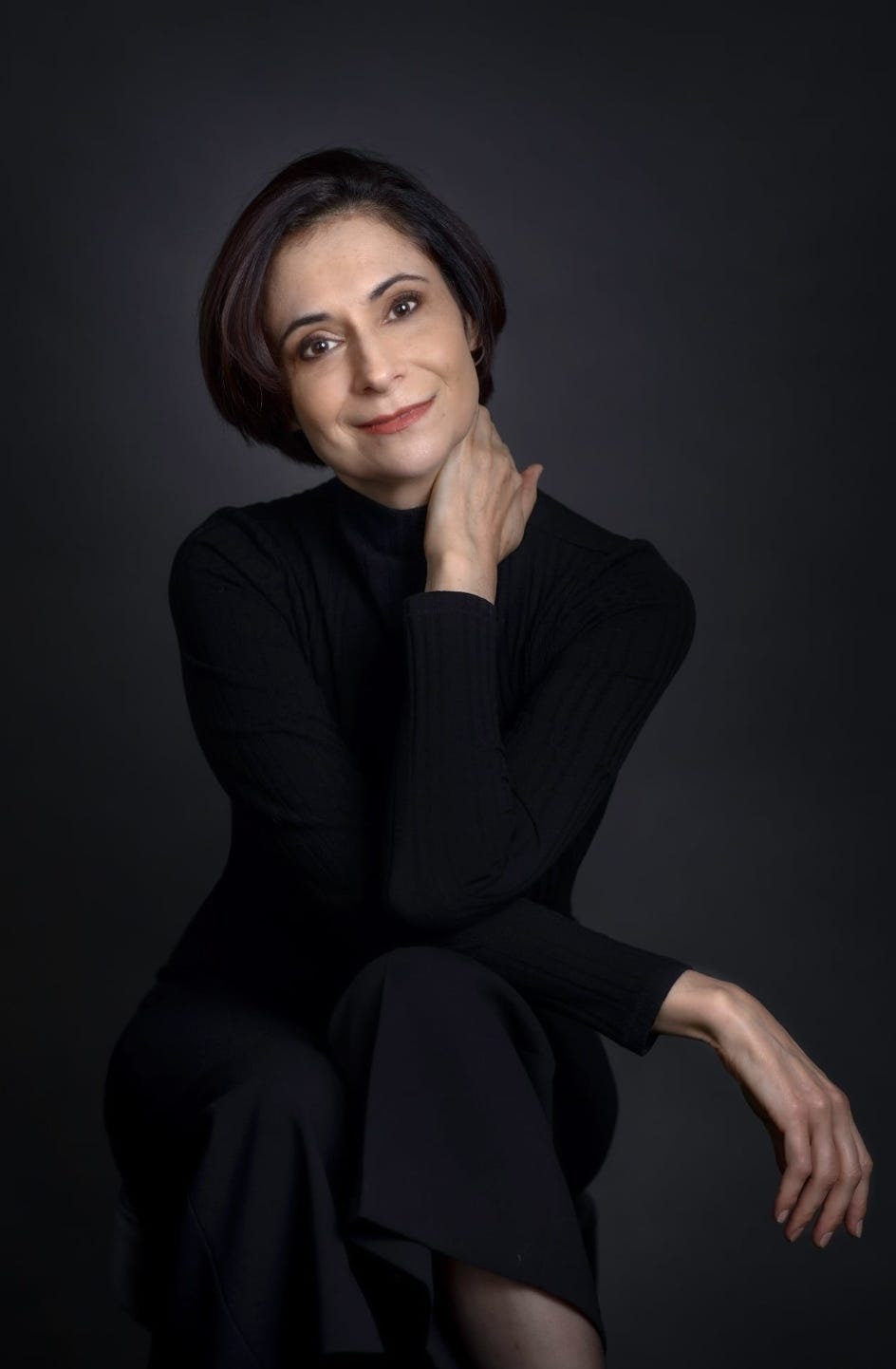
I also want to touch on the workshop series I just launched for JUDITH’s readership. As you might have read last week, Jena Schwartz is leading our inaugural offering. I signed up myself, so I could experience it firsthand.
I can only say I wish I’d begun offering writing workshops to this community sooner. It is inexpressibly therapeutic to participate in this one.
No one is attempting to create polished or publishable work. We are just very briefly responding to inviting and evocative prompts and sharing if we feel moved to do so. By sharing, I mean we can choose to post in a totally private Facebook group with no one in it but other workshop participants.
Fam, everyone in the workshop is Jewish. It’s an incredibly simpatico group. The trust between the group members is so moving. Sharing feels wonderfully, blessedly safe. Everyone is supportive. Everyone is going deep. It has honestly been a revelation for me. I’m finding it so restorative.
These workshops will remain inexpensive and no one will be turned away for lack of funds. We will be bringing you a different one each month, and Jena herself will offer a few more throughout the next year. I highly encourage you to come to the next one if you’re feeling isolated, alone, despairing, or depleted. Or even if you just want to spark your own creative energy.
Okay, I’ll write about the NYC mayoral primary tomorrow or Sunday at the latest. I’m still reading different perspectives and trying to understand what his primary victory means. I know a lot of people post immediately after something happens, while the issue is the hottest, but I don’t think my own hot takes are the most valuable thing I have to offer you. I believe it’s the in-depth rumination and range of opinions I take in that lead to what I hope is elevated commentary.
Much love to you all in the meantime.
Hold steady and stay strong.
Am Yisrael Chai.
I'd like to mention that I took a workshop with Susan Comninos just this past week. It was excellent and I hope she will be offering one soon through Judith sometime soon. I greatly enjoyed Rachel's curations but I look forward to Susan's now.
Everything you say here is compelling and beautifully put.