
Jew Woo
Children Of Israel Are Never Alone

Hey, beloved tribe.
Let’s talk about woo.
There are so many downsides to being a non-believer in anything otherworldly or supernatural; ask me how I know.
I’ve heard so many religious people say: I can’t imagine going through life thinking this is all there is. I’ve seen people physically shudder at the thought of it.
Who wouldn’t want to believe? That there’s a reason for suffering? That in the end, there’s delivery and redemption? That we see our departed loved ones again? That we go to a better place? That there exists a realm where all is clarity, understanding, forgiveness?
In my adult life, there was a single stretch of maybe six months where I did believe in God. I’d had an extraordinary experience (a story for another day) and I came away from it a believer.
I’ll never forget the fathomless happiness of that time. I not only believed there was a God; I knew. I knew it the way I know I’m tapping on a keyboard right now.
During that time, God was all I wanted to talk about, think about, read about. Every day, I felt privately drunk on euphoria. It was among the very best feelings I’ve ever had. It was like falling in love without the fear.
When I look back at those months now, I wonder if I was experiencing something like hypomania, or maybe even the mildest manic break, though I had no other symptoms of the disorder: no sleeplessness, pressured speech, spending sprees, graphomania, etc.
That conviction vanished gradually and I have no access to it anymore. And yet — how can I put this?
Running like a parallel current alongside my current non-belief in God is the memory not merely of believing but knowing God was real. And this is one of many reasons I identify as agnostic rather than atheist even now.
In any event, I harbor true jealousy toward believers. I envy the comfort and the joy that belief brings. I envy their conviction that an otherworldly entity is accompanying them through life. I envy the magical thinking: that nothing is as it seems, that their prayers are heard, that God is sending them signs all the time.
This jealousy extends to all kinds of woo, really. Wouldn’t it be fun to believe in astrology? To think that the stars hold some key to my character and destiny? When I was a little kid, I loved reading my horoscope in the local paper, telling me it was or wan’t the right time to expect love, launch a new endeavor, or reveal my plans.
Wouldn’t it be fun to believe in tarot cards? Or the I-Ching? Fun to practice witchcraft, be a pagan? Fun to believe in reincarnation — that I’ve lived many lives before and have many more to come? That if I’m inexplicably drawn to a stranger, we must have known each other in another life?
As I touched on in last Friday’s newsletter, I’ve always had a built-in aversion to all of this. Two things stop me from enjoying the countless new-age spiritual practices that seem so compelling to so many people around me:
I can’t bring myself to believe in any of it, and
I have a visceral resistance to spiritual practices that aren’t Jewish.
But I’ve had something of a faint breakthrough on this front, one that’s been gradually happening over the last two years. As I go deeper into my Jewish spirituality, I’ve come to recognize a few truths that are helping me find my way to a suspension of disbelief on many previously dismissed ideas:
There is almost no version of a spiritual practice I’ve ever encountered that doesn’t have a Jewish version of itself;
Most spiritual practices ask us to believe as we’re taking an action; Judaism stresses action as a starting point, as a path to engagement and potential belief.
The second point is especially freeing, and in this spirit, I spent the morning with my local friend Debbie Plawner. At her invitation, I walked the color wheel she created, which I found nourishing and deeply worthwhile as a prelude to Shabbat. This is what her wheel looks like:
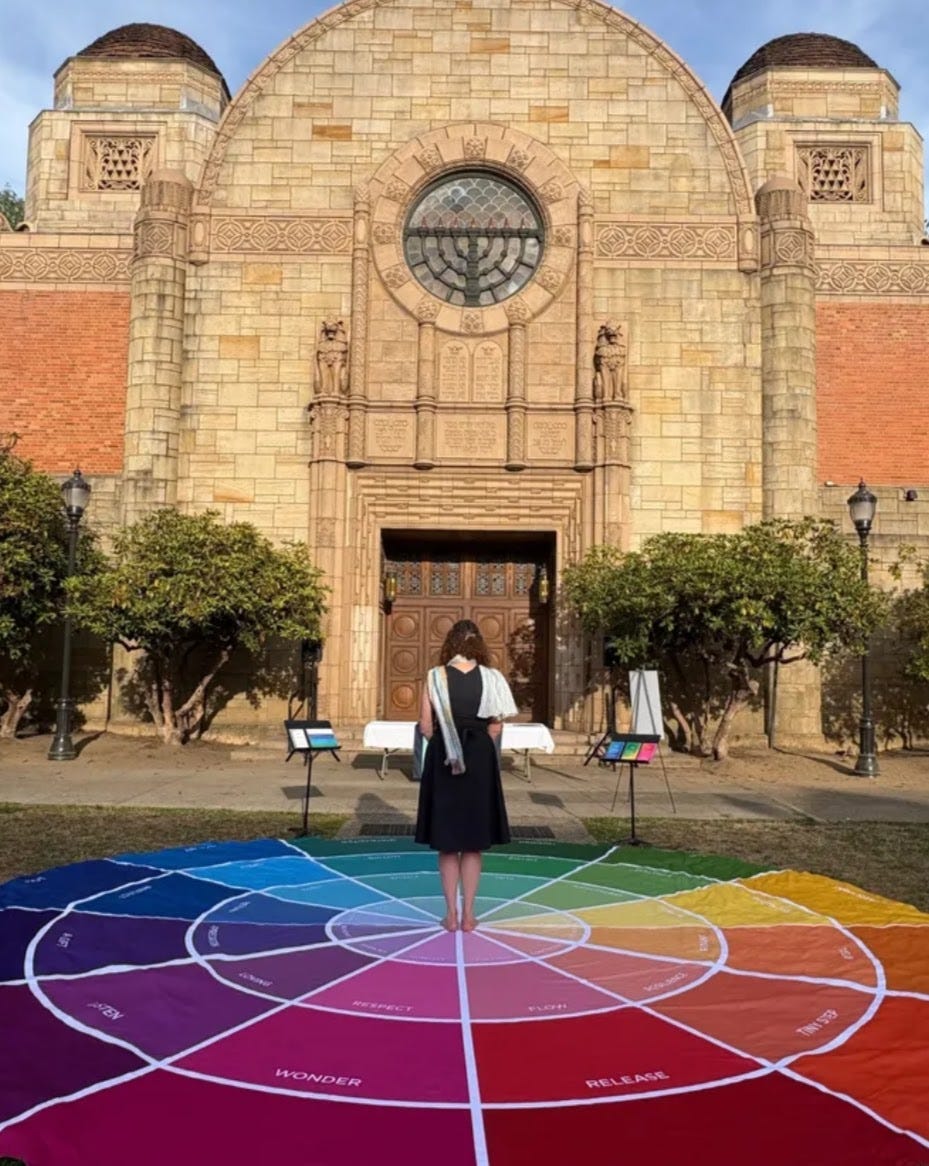
Debbie spent years studying color theory, and one day on a hike, she had a vision of how that study could be applied to the Torah. In her words:
Twelve years ago, I taught myself how to chant Torah through color-coded cantillation. Seeing the words in color made the sounds easier to retain — and opened new layers of meaning.
There are moments when everything becomes clear. For me, that happened on a hike in 2020, when the vision of the Oracolor Wheel emerged. Since then, I’ve shared it as a guide for clarity, balance, and renewed energy.
Oracolor infuses 48 colors with specific meanings, offering a simple guide for living with more vibrancy and depth. Rooted in Torah wisdom, Oracolor invites alignment of mind, body, and heart, awakening the light within. Each color carries distinct energy you can draw on whenever you need support.
“Greater is learning Torah than the priesthood and than royalty, for royalty is acquired by 30 steps, and the priesthood by 24, but the Torah by 48 ways.” —Pirkei Avot 6:6
This vision has taken several forms and offers the interested several ways in.
You can set up a reading with Debbie, where she uses her Oracolor deck to guide the session;
You can walk the color wheel, a personal journey of sorts, which is done in a certain way as laid out in her guide;
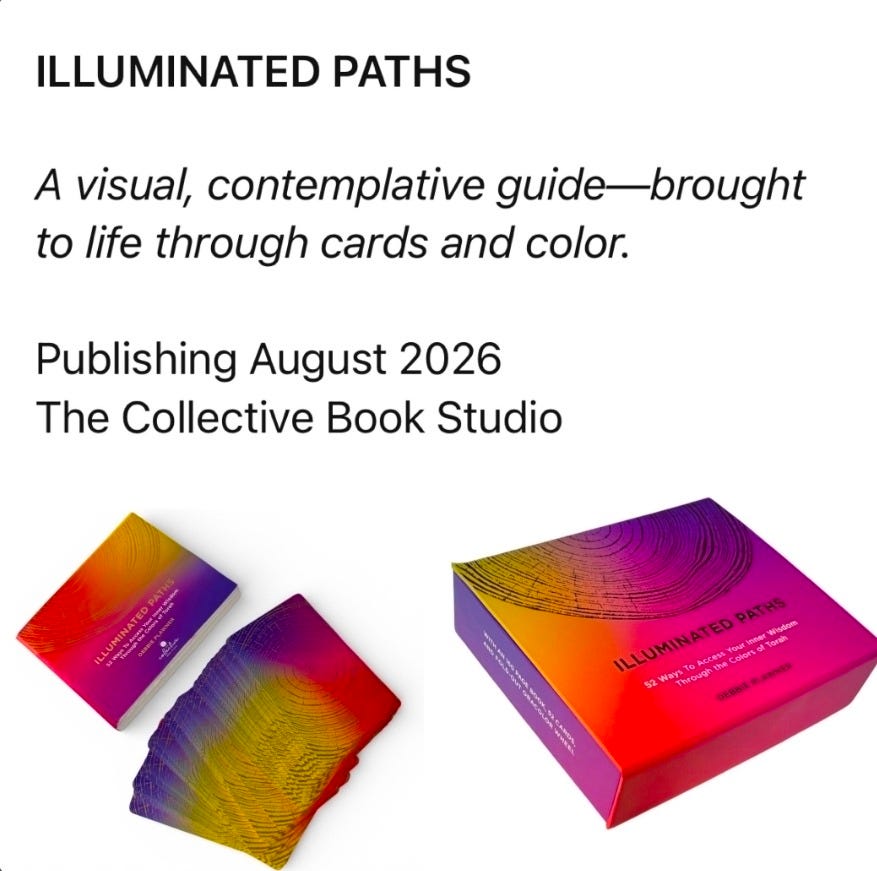
Soon you will be able to acquire your own Illuminated Paths deck, which will come with your own Oracolor wheel.
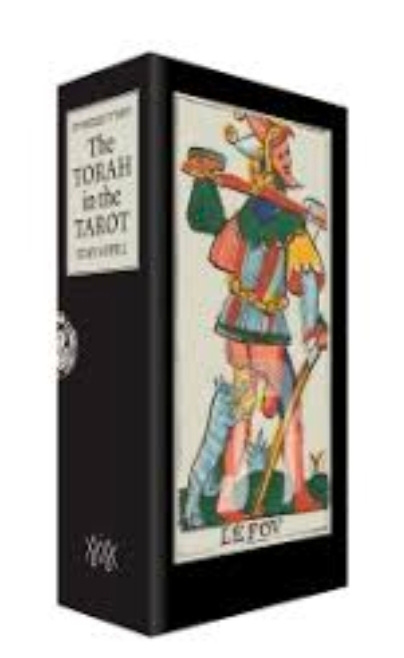
By sheer coincidence, within the same 24 hours that I was walking the wheel, Sally Wiener Grotta released a podcast episode over at JUDITH in which she is interviewing Stav Appel, author of The Torah In The Tarot, which posits a fascinating theory: that during the Inquisition, the tarot deck offered a secret way for conversos to enage in Jewish education.
Here is the description offered by Ayin Press:
In The Torah in the Tarot, Appel carefully analyzes the Noblet Tarot, uncovering a rich array of Jewish symbols ingeniously concealed in its images. Given the deck's origin during the Catholic Church’s campaign to abolish Judaism, Appel argues persuasively that its secret content suggests it originally served as a tool for clandestine Jewish education. Writing in a rich style that draws on rabbinic literary forms, Appel has presented a landmark contribution to the field of Tarot studies—revealing that when we perceive the Tarot through a Jewish lens, we can, at long last, recognize the Torah hidden in the Tarot.
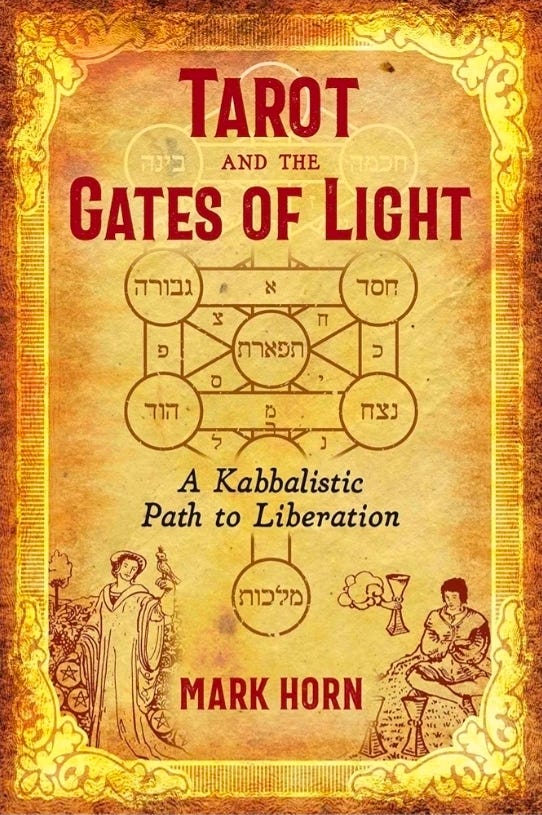
And finally, I also learned yesterday of a book titled Tarot And The Gates Of Light: A Kabbalistic Path To Liberation, described as an innovative, spiritual workbook that integrates the Tarot and the Kabbalistic tradition of Counting the Omer.
This gave me an idea for an event.
Would it be fun to assemble a Zoom panel of these three Jewish writers and their respective card decks (two tarot, one oracle) and do an hour-long event where we talk about their books and maybe even have them do readings for community members?
Please let me know whether this is an idea you find worthy of pursuit. You don’t have to believe in tarot or oracle decks, you just need to be willing to suspend outright rejection long enough for a brief experience of them, which might or might not surprise, intrigue, or yield insight / direction — and will hopefully just be fun.
Voting has been enabled for all subscribers, so please weigh in above!
Okay, fam. I wish you a Sabbath filled with whatever brand of Jewish magic you believe in.
I’ll be back with you on Monday with political topics.
Shabbat shalom.
Am Yisrael Chai.
I felt exactly the way you described until I discovered Kabbalah. I also need a Jewish lens and Kabbalah has everything. Spirituality, connection, growth, psychology and quantum physics. There’s also Kabbalistic astrology, designed as a guide to our personal challenges. 🙏🫂🥰
I am an open minded skeptic, so I’m in!